Broomfield Basements Accumulate More Than Radon When Soil Moisture and Gas Share the Same Entry Points
What Happens When Radon Infiltration and Moisture Problems Are Addressed as Separate Issues
When seasonal snowmelt and spring precipitation push moisture against Broomfield foundations, the same gaps, cracks, and unsealed penetrations that admit water vapor also allow radon gas to enter — meaning homeowners who address only one problem leave the other one running. Treating moisture and radon as separate service calls produces redundant disruption, conflicting system installations, and occasionally systems that actually undermine each other: a dehumidifier running in a basement that isn't radon-mitigated can increase the negative pressure that pulls more soil gas indoors. Master Mitigators integrates radon mitigation, vapor barrier installation, and crawl space sealing into a single coordinated scope that eliminates both problems through a unified foundation-level intervention.
Broomfield's position between the Denver metro and Boulder County places it in a climate zone where temperature swings between dry winter heating periods and wet spring conditions create cyclical stress on foundation moisture barriers. Homes in established Broomfield neighborhoods near Midway Boulevard experience more foundation moisture intrusion than newer construction on elevated pads farther west, but radon risk exists across the city regardless of moisture conditions. When both issues are present simultaneously, coordinated treatment produces outcomes that neither service achieves alone: a dry, radon-controlled foundation space that stays that way through seasonal changes.
How Integrated Radon and Moisture Control Is Installed in Broomfield Homes
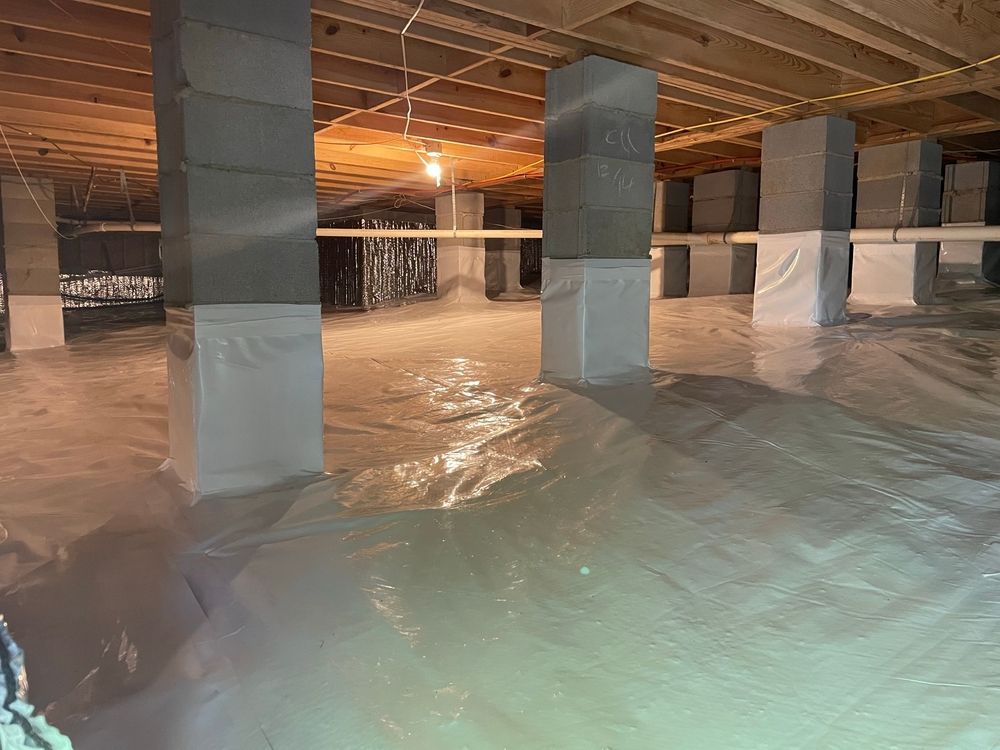
Integrated installation begins with a combined assessment that maps radon entry points alongside moisture intrusion locations — because in most Broomfield homes, these are the same locations. Foundation cracks are sealed with polyurethane before any system goes in; unsealed penetrations around pipes and conduits are caulked; sump pits are capped with airtight lids that include radon vent connections. Vapor barrier installation follows, covering all exposed soil in crawl spaces and overlapping at seams with sealed joints that prevent both moisture vapor and soil gas from bypassing the membrane.
Sub-slab depressurization is then installed with suction points positioned to work in concert with the sealed foundation — the vapor barrier and crack sealing improve the system's efficiency by reducing short-circuit air paths that would otherwise dilute suction pressure. The combined result is measurable: post-installation testing in Broomfield homes with integrated systems typically shows radon below 2.0 pCi/L, basement humidity levels dropping by 15 to 25 percentage points, and musty odors that disappear within days of activation. Learn More about comprehensive indoor air quality services in Broomfield and address your foundation's moisture and radon issues in a single coordinated project.
Problems That Appear When Moisture and Radon Entry Points Are Left Unaddressed in Broomfield
Homeowners who address radon without moisture control — or moisture without radon — commonly experience recurring problems that require return service calls. These are the specific failure conditions that integrated treatment prevents:
- Radon mitigation fans installed in unsealed crawl spaces pull in humid air that bypasses the suction zone, reducing system efficiency and accelerating fan motor corrosion in Broomfield's wet spring conditions
- Vapor barriers installed without radon consideration can trap soil gas beneath the membrane, increasing sub-slab pressure and pushing elevated radon through slab cracks that remain unsealed
- Dehumidifiers operating in radon-active basements create additional negative pressure that increases soil gas infiltration rates, worsening the radon problem while managing the moisture symptom
- Unsealed sump pits remain the primary radon entry point even after sub-slab systems are installed, negating a significant portion of the mitigation system's effectiveness
- Recurring musty odors in Broomfield basements often indicate ongoing soil gas infiltration that a moisture-only treatment hasn't addressed
Each of these outcomes is preventable when both conditions are assessed and treated together. Contact us to schedule comprehensive indoor air quality services in Broomfield and eliminate the foundation conditions that drive both problems simultaneously.