Englewood Crawl Space Moisture Doesn't Disappear With a Dehumidifier — It Needs Encapsulation
Why the Source of Crawl Space Moisture in Englewood Homes Requires a Different Solution Than Symptom Management
Running a dehumidifier in an open crawl space is the most common moisture management mistake Englewood homeowners make — because the dehumidifier is pulling moisture from air that's continuously replenished by exposed soil, foundation seepage, and vented outdoor humidity. The unit runs constantly, the coils ice up in winter, the collection bucket fills every 24 hours, and the crawl space stays wet because the source was never interrupted. Professional encapsulation changes that equation by isolating the crawl space from its moisture sources rather than reacting to symptoms after they appear. Master Mitigators installs vapor barrier systems in Englewood homes that eliminate ground moisture evaporation and reduce crawl space humidity to levels where wood rot, mold, and radon migration become structural non-issues.
Englewood's position in the South Denver metro — where older housing stock near South Broadway and Hampden Avenue frequently includes original ventilated crawl spaces built to 1950s and 1960s standards — means a significant share of local homes have crawl spaces that were never designed for modern moisture control expectations. Those vented designs made sense when homes were less airtight overall; in today's better-insulated houses, the same vents that were meant to dry the crawl space instead draw in warm, humid seasonal air that condenses on cooler structural surfaces and feeds ongoing moisture problems.
How Crawl Space Encapsulation Is Installed in Englewood Homes
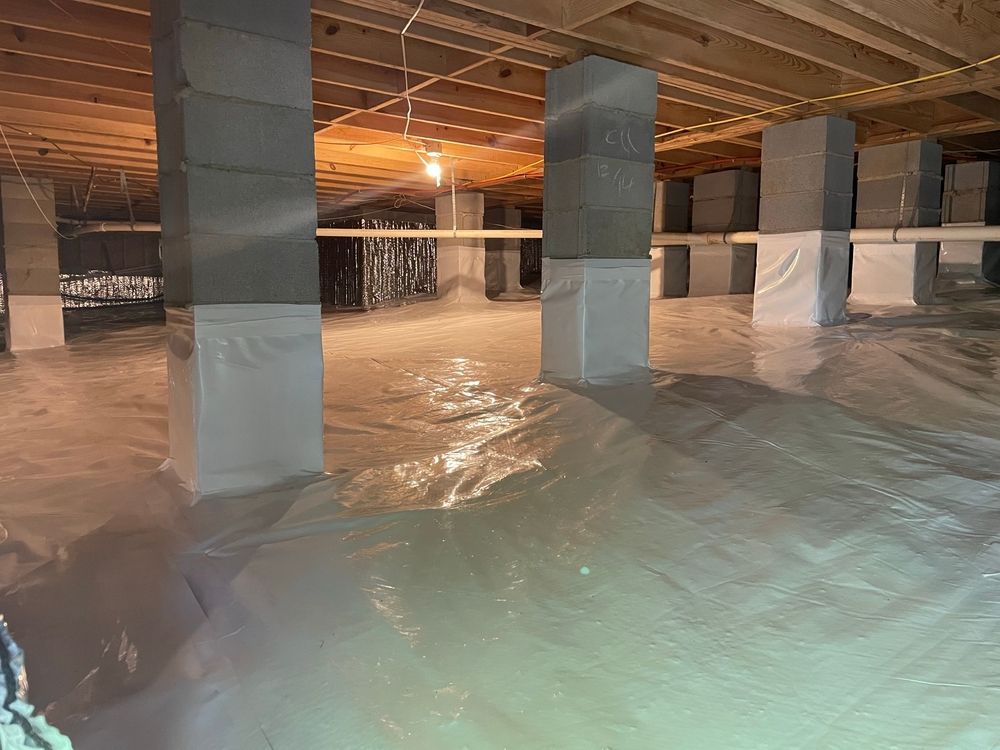
Encapsulation begins with clearing the crawl space of debris and correcting any standing water or active drainage issues before any barrier material goes in — because encapsulating over an active water problem traps it rather than controlling it. Ground grading and perimeter drainage corrections are completed first where needed. A 20-mil reinforced polyethylene vapor barrier is then installed across the entire ground surface and up the foundation walls, overlapping seams by twelve inches and sealing all joints with pressure-sensitive tape rated for subterranean applications. All foundation vents are sealed with rigid foam and spray foam to convert the crawl space from a vented to a conditioned or semi-conditioned environment.
When radon mitigation is also indicated — which is common in Englewood given the Front Range soil conditions — the suction point is installed beneath the barrier layer before it's sealed, allowing the vapor barrier and mitigation system to work in concert. Post-encapsulation inspection confirms that all seams, penetrations, and wall transitions are sealed, and a follow-up moisture reading taken 30 days after installation typically shows relative humidity in the crawl space dropping from 70 to 80 percent to below 50 percent permanently. Contact us today to schedule crawl space encapsulation services in Englewood and convert a recurring problem into a resolved one.
How to Evaluate Whether Your Englewood Crawl Space Needs Encapsulation
Crawl space conditions vary, and not every problem requires the same scope of encapsulation work. These are the indicators and evaluation criteria that determine what Englewood homes actually need:
- Visible efflorescence or mineral deposits on foundation walls indicate water has been moving through the concrete repeatedly — a sign that surface sealing alone won't solve the moisture source
- Soft, darkened, or visibly degraded floor joists above the crawl space indicate moisture exposure has already been occurring long enough to compromise structural material
- Musty odors entering living spaces from below — particularly noticeable in Englewood homes with original hardwood floors — indicate active soil moisture evaporation that encapsulation will interrupt
- Prior dehumidifier use that hasn't resolved recurring condensation confirms the moisture source is ongoing and cannot be managed by air treatment alone
- Elevated radon test results combined with crawl space moisture indicate both issues share the same foundation entry pathways and should be addressed in a single coordinated installation
Homeowners who evaluate their crawl space against these criteria can determine whether a full encapsulation scope is warranted or whether targeted repairs will resolve the condition. Get in Touch today to schedule a crawl space assessment for your Englewood home and receive a recommendation based on what's actually present.